2026-08-28

mORMot 2 HTTP Server: Memory Efficiency and Thread Smoothing

High-performance HTTP servers are often benchmarked primarily by their peak requests per second. For a REST server, however, peak throughput is only part of the story. A server also needs to remain responsive when requests have very different execution times: some may complete in a few microseconds, while others may spend milliseconds waiting for a database, a remote service, or some other slow operation.

The mORMot 2 asynchronous HTTP server was one of the fastest in the TFB benchmark. But it was designed as a scalable REST server. Our project has recently received two related improvements in this area: a closer look at its memory allocation behavior, and a refined thread smoothing mechanism for waking worker threads on POSIX systems.

Continue reading

2026-08-07

A 2 GB/s XML Parser for Delphi and Free Pascal: SAX, Streaming and DOM Without the Usual Trade-offs

XML may no longer be fashionable, but it is still everywhere.

Scientific datasets, configuration files, industry standards, legacy systems, government data, document formats and countless integration interfaces continue to produce XML. And when XML documents become large, the choice of parser can make a surprisingly large difference.

For mORMot 2, we have recently written a new XML parser, TXmlParser, with a slightly different goal from the traditional XML libraries found in the Delphi and Free Pascal ecosystems. It started from an AI-driven pull request from zen010101, then it was fully rewritten by hand for performance and enhanced to support several API modes.

Instead of choosing between a low-level SAX parser and a convenient DOM parser, the same parser provides several levels of access:

  • a zero-allocation SAX/pull API;
  • a streaming/navigation API for selecting only the parts of the document that matter;
  • a hybrid SAX/DOM API, where selected subtrees can be materialized as TDocVariantData;
  • and a full XML-to-TDocVariant DOM representation, when that is what the application actually needs.

The interesting part is that the performance remains very high at all these levels.

Using the 24 MB nasa.xml reference document from the University of Washington XML repository, the raw parser reaches about 2.1 GB/s, while the full DOM conversion reaches about 424 MB/s. Selective streaming reaches about 1.6 GB/s, and once the DOM exists, traversing it through the new TDocVariantData.Product() enumerator reaches about 7 GB/s.

There is also an interesting memory optimization: enabling dvoInternNames reduces the complete DOM footprint from approximately 60 MB to 40 MB, with essentially no performance penalty.

The complete benchmark is shown below.

Continue reading

2024-10-16

Release of mORMot 2.3 Stable

It is time for a new mORMot release!

Continue reading

2024-09-06

Swagger/OpenAPI Client Generator for Delphi and FPC

OpenAPI, which was formerly called Swagger, is a set of specifications to encode the server API endpoints definitions into text, mostly JSON.
From this reference text, you can generate client code to access the service, in a vast number of languages.

Delphi seems to be far behind other languages, in terms of this code generation. I found nothing even working for FPC.
Since we needed it for our internal tools at Tranquil IT, we just published the new mormot.net.openapi.pas Open Source unit, which is quite a game changer. Thanks Andreas for starting this project, and testing it in its early age!

Continue reading

2024-01-01

Happy New Year 2024 and Welcome MGET

Last year 2023 was perhaps not the best ever, and, just after Christmas, we think about all people we know still in war or distress.
But in the small mORMot world, 2023 was a fine millesima. A lot of exciting features, a pretty good rank in benchmarks, and a proof of being ready for the next decade.

For this new year, we would like to introduce you to a new mORMot baby: the mget command line tool, a HTTP/HTTPS web client with peer-to-peer caching.
It is just a wrapper around a set of the new PeerCache feature, built-in the framework web client class - so you can use it in your own projects if you need to.

Continue reading

2022-08-12

New Client for MongoDB 5.1/6 Support

Starting with its version 5.1, MongoDB disabled the legacy protocol used for communication since its beginning.
As a consequence, our mORMot client was not able to communicate any more with the latest versions of MongoDB instances.

Last week, we made a deep rewrite of mormot.db.nosql.mongodb.pas, which changed the default protocol to use the new layout on the wire. Now messages use regular MongoDB Database Commands, with automated compression if needed.

No change is needed in your end-user MongoDB or ORM/ODM code. The upgrade is as simple as update your mORMot 2 source, then recompile.

Continue reading

2022-07-09

Native TLS Support for mORMot 2 REST or WebSockets Servers

Since the beginning, we delegated the TLS encryption support to a reverse proxy server, mainly Nginx. Under Windows, you could setup the http.sys HTTPS layer as usual, as a native - even a bit complicated - solution.
Nginx has several advantages, the first being a proven and efficient technology, with plenty of documentation and configuration tips. It interfaces nicely with Let's Encrypt, and is very good for any regular website, using static content and PHP. This very blog and the Synopse web site is hosted via Ngnix on a small Linux server.

But in mORMot 2, we introduced a new set of asynchronous web server classes. So stability and performance are not a problem any more. Some benchmarks even consider this server to be faster than nginx (the stability issue mentioned in this post has been fixed in-between).
We just introduced TLS support of our socket-based servers, both the blocking and asynchronous classes. It would use OpenSSL if available, or the SChannel API layer of Windows. Serving HTTPS or WSS with a self-signed certificate is just a matter of a single parameter now, and performance seems pretty good, especially with OpenSSL.

Continue reading

2022-05-21

New Async HTTP/WebSocket Server on mORMot 2

The HTTP server is one main part of any SOA/REST service, by design.
It is the main entry point of all incoming requests. So it should better be stable and efficient. And should be able to scale in the future, if needed.

There have always been several HTTP servers in mORMot. You can use the HTTP server class you need.
In mORMot 2, we added two new server classes, one for publishing over HTTP, another able to upgrade to WebSockets. The main difference is that they are fully event-driven, so their thread pool is able to scale with thousands of concurrent connections, with a fixed number of threads. They are a response to the limitations of our previous socket server.

Continue reading

2021-08-17

mORMot 2 on Ampere AARM64 CPU

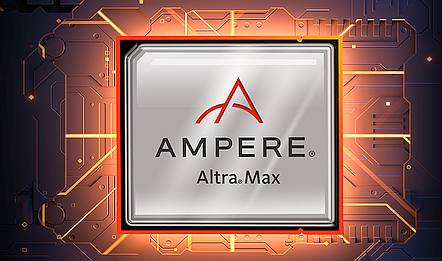
Last weeks, we have enhanced mORMot support to one of the more powerful AARM64 CPU available: the Ampere Altra CPU, as made available on the Oracle Cloud Infrastructure.

Long story short, this is an amazing hardware to run on server side, with performance close to what Intel/AMD offers, but with almost linear multi-core scalability. The FPC compiler is able to run good code on it, and our mORMot 2 library is able to use the hardware accelerated opcodes for AES, SHA2, and crc32/crc32c.

Continue reading

2021-05-14

Enhanced HTTP/HTTPS Support in mORMot 2

HTTP(S) is the main protocol of the Internet.
We enhanced the mORMot 2 socket client to push its implementation into more use cases. The main new feature is perhaps WGET-like processing, with hashing, resuming, console feedback, and direct file download.

Continue reading

2020-10-26

mORMot2 Renaming

Last weeks, we introduced REST, ORM and SOA process in the mORMot2 repository.

During this phase, we split the huge mORMot.pas unit into several mormot.rest.*.pas, mormot.orm.*.pas and mormot.soa.*.pas units, to follow SOLID principles.

But we also renamed the base types into something more consistent and easier to work with. Forget about TSQLRecord or TSQLRest, discover TORM and TRest!

Continue reading

2020-03-03

Preparing Revision 2.x of the mORMot Framework

The more I think of it, the more I am convinced it is time to change how the framework is versioned.
We have version 1.18 since years... difficult to follow... time to upgrade!


I would like to upgrade mORMot to version 2 - with a major refactoring.

Continue reading

2019-09-18

Introducing Kingdom Driven Design at EKON 23

There are still some days to join EKON 23 conferences with the reduced price!

I will make 2 sessions, and 1 workshop, in English (my German is not good enough), about practical project design and mORMot.
If you find DDD is a bit too much for you, but still want to write clean code, check this!

Continue reading

2016-12-19

JSON Web Tokens (JWT)

JSON Web Token (JWT) is an open standard (RFC 7519) that defines a compact and self-contained way for securely transmitting information between parties as a JSON object. This information can be verified and trusted because it is digitally signed. JWTs can be signed using a secret (with the HMAC algorithm) or a public/private key pair using RSA or ECDSA.

They can be used for:

  • Authentication: including a JWT to any HTTP request allows Single Sign On user validation across different domains;
  • Secure Information Exchange: a small amount of data can be stored in the JWT payload, and is digitally signed to ensure its provenance and integrity.

See http://jwt.io for an introduction to JSON Web Tokens.

Our mORMot framework now implements JWT:

  • HS256 (HMAC-SHA256) and ES256 (256-bit ECDSA) algorithms (with the addition of the "none" weak algo);
  • Validates all claims (validation dates, audiences, JWT ID);
  • Thread-safe and high performance (2 µs for a HS256 verification under x64), with optional in-memory cache if needed (e.g. for slower ES256);
  • Stand-alone and cross-platform code (no external dll, works with Delphi or FPC);
  • Enhanced security and strong design - per instance, it is by design immune from https://auth0.com/blog/2015/03/31/critical-vulnerabilities-in-json-web-token-libraries
  • Full integration with the framework.

Continue reading

2016-11-10

EKON20 mORMot Conferences

EKON20 is now over, and there was a lot of people, great speakers, beautiful T-Shirt, and fresh beer! I've published the slides of my mORMot conferences on SlideShare... EKON20 From RAD to SOA with mORMot EKON20 mORMot Legacy Code Technical Debt Delphi Conference EKON20 Ride a mORMot EKON20 2016  […]

Continue reading