
Illustrated Spare Parts Catalog is, as its name suggests, a software for creating and publishing spare parts catalogs. It uses mORMot for client-server communication and ORM, and SynPdf for the reporting. Sounds like a powerful solution. It is also a testimony that you could use big databases (20 GB […]
2015-09-28
mORMot show case: Illustrated Spare Parts Catalog
2015-09-28. Open Source › mORMot Framework
2015-09-25
ORM TNullable* fields for NULL storage
2015-09-25. Open Source › mORMot Framework
In Delphi code, NULLable types do not exist as such. There is no
native int? type, as in C#.
But at SQL and JSON levels, the NULL value does exist and should be converted
as expected by the ORM.
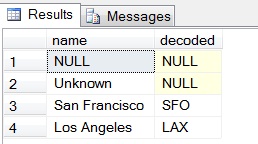
In SQLite3 itself, NULL is handled as stated in http://www.sqlite.org/lang_expr.html
(see e.g. IS and IS NOT operators).
It is worth noting that NULL handling is not consistent among all existing
database engines, e.g. when you are comparing NULL with non NULL values... so
we recommend using it with care in any database statements, or only with proper
(unit) testing, when you switch from one database engine to another.
By default, in the mORMot ORM/SQL code, NULL will appear only in
case of a BLOB storage with a size of 0 bytes.
Otherwise, you should not see it as a value,
in most kinds of ORM properties.
Null-oriented value types have been implemented in our framework, since the object pascal language does not allow defining a nullable type (yet).
We choose to store those values as variant, with a set of
TNullable dedicated types, as defined in
mORMot.pas:
type
  TNullableInteger = type variant;
  TNullableBoolean = type variant;
  TNullableFloat = type variant;
  TNullableCurrency = type variant;
  TNullableDateTime = type variant;
  TNullableTimeLog = type variant;
  TNullableUTF8Text = type variant;
2015-09-21
Embarcadero bought by Idera
2015-09-21. Pascal Programming
Just a link found on Internet. Jefferies is also leading a US$425m covenant-lite credit to back Idera's acquisition of Embarcadero Technologies. Idera is backed by TA Associates. The deal, which launches on Thursday, includes a US$25m revolving credit, a US$300m first-lien term loan and a US$100m […]
2015-09-17
AVAST did detect ALL Delphi programs as dangerous
2015-09-17. Pascal Programming
Today, an avalanche of "false
postitive detection" of AVAST heuristic engine did occur.
Any executable built with Delphi XE8 or Delphi 10 Seattle was identified as a
Win32:Banker-MGC [Trj] threat!

Heuristic analysis is a method employed by many computer antivirus programs designed to detect previously unknown computer viruses, as well as new variants of viruses already in the "wild".
2015-09-16
Feedback from the Wild
2015-09-16.
We just noticed a nice feedback from a mORMot user. Vojko Cendak commented the well-known DataSnap analysis based on Speed & Stability tests blog article written by Roberto some months years (!) ago. It is not meant to be the final word, perhaps there was some tuning possible for RTC (which is […]
2015-09-14
Performance issue in NextGen ARC model - much better now
2015-09-14.
Back in 2013, I found out an implementation weakness in the implementation
of ARC weak references in the RTL.
A giant lock
was freezing all threads and cores, so would decrease a lot the performance
abilities of any ARC application, especially in multi thread.

I just investigated that things are now better.
2015-08-31
Delphi 10 = DX Seattle is out, mORMot supports it
2015-08-31. Pascal Programming
We expected Delphi XE9, and now we have Rad Studio 10 Seattle, with Delphi renamed as Delphi 10 Seattle, or simply DX. No big news for the Delphi compiler itself (we are still waiting for Linux server support), but a lot of FireMonkey updates, Windows 10 compatibility enhancements, enhancements to […]
2015-08-24
Introducing Delphinus PackageManager
2015-08-24. Pascal Programming
You may have missed the news. So I relay here the information from Delphinus PackageManager blog article. Delphinus is a new Package Manager, which runs on Delphi XE and newer, directly from within your IDE. It is GitHub-based, and fairly easy to add a reference to. Of course, I tried to add mORMot […]
« previous entries - page 13 of 53 - next entries »
